
Last updated November 15, 2026
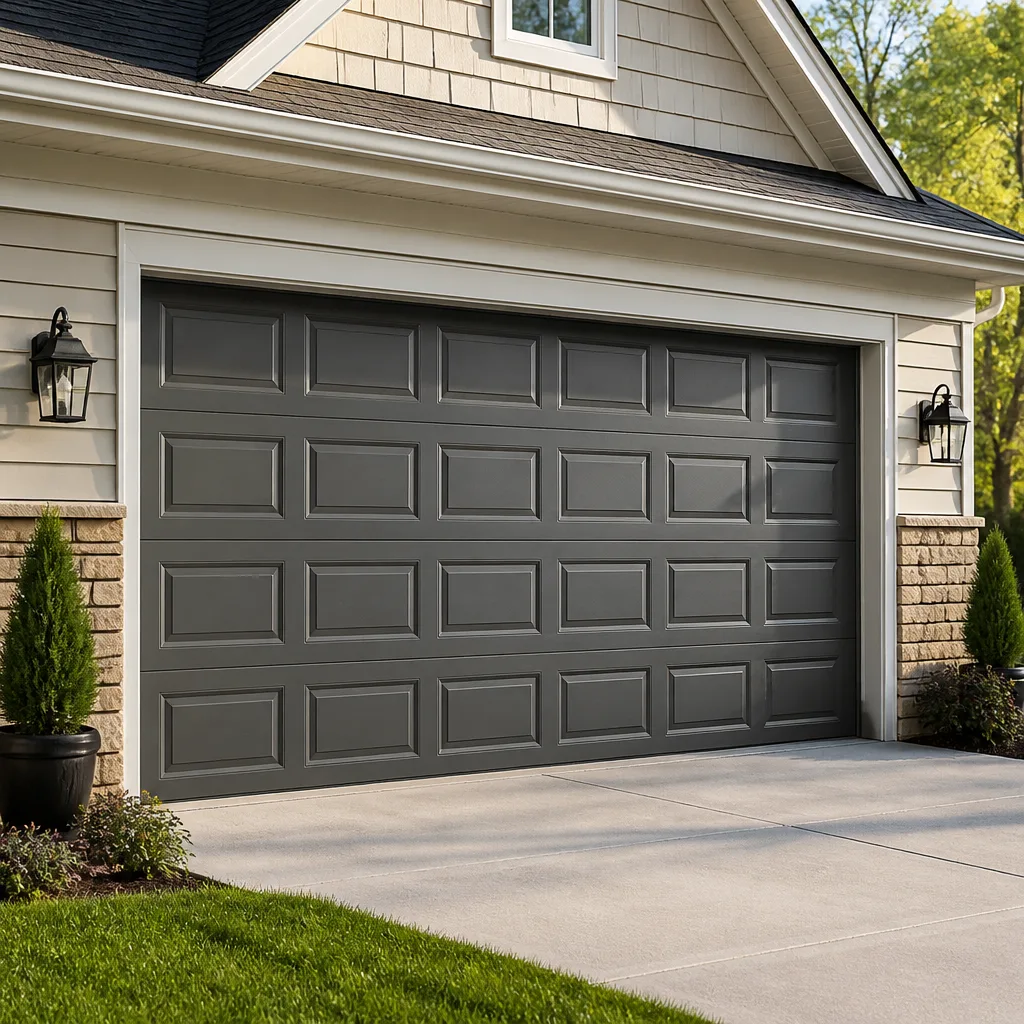 Raised-panel steel
 Carriage house
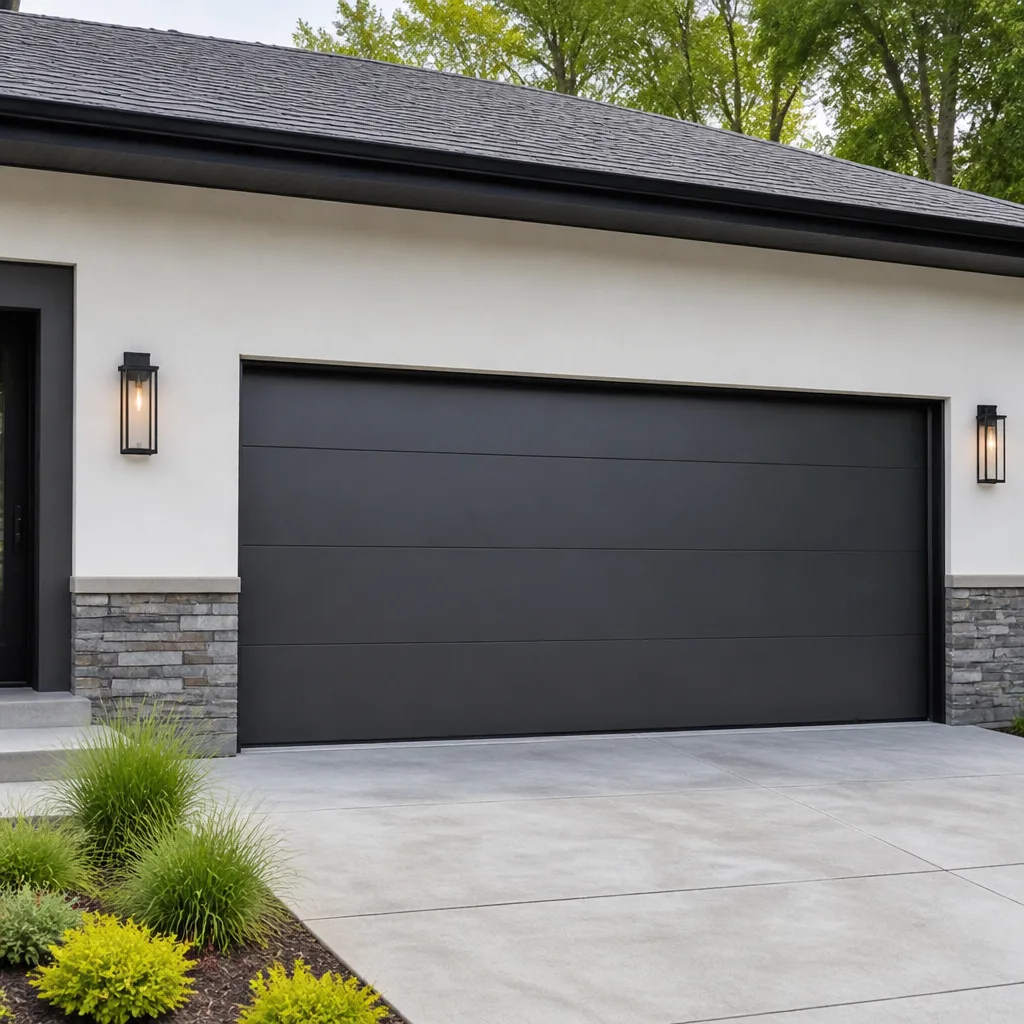 Modern flush
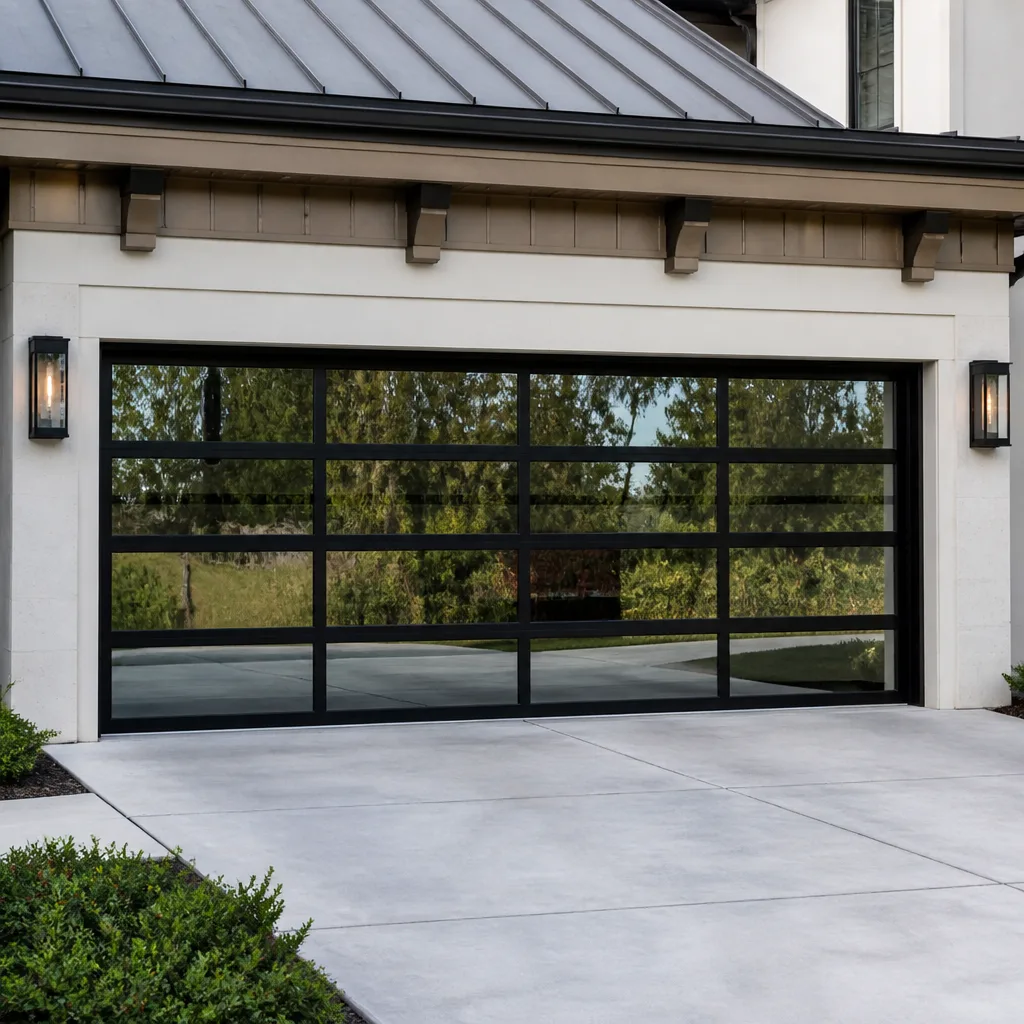 Full-view glass
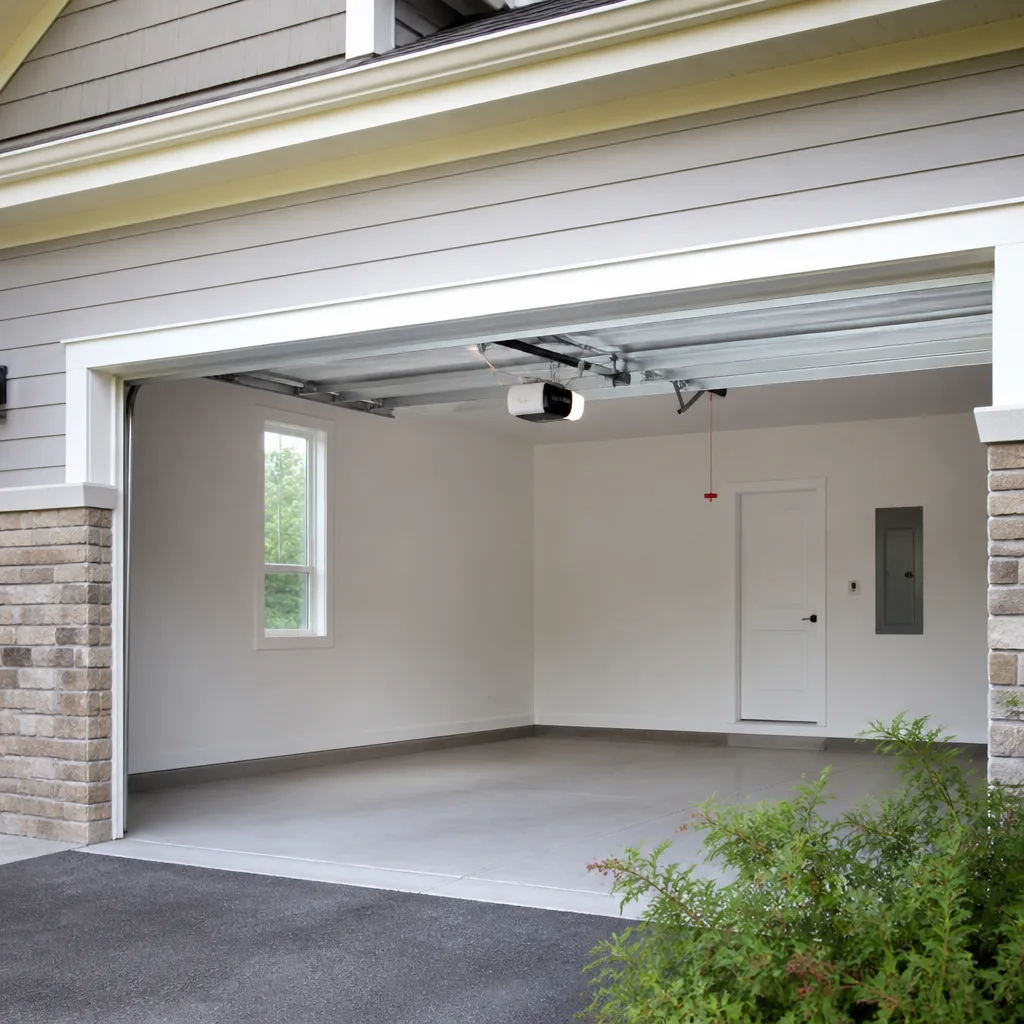 LiftMaster openers
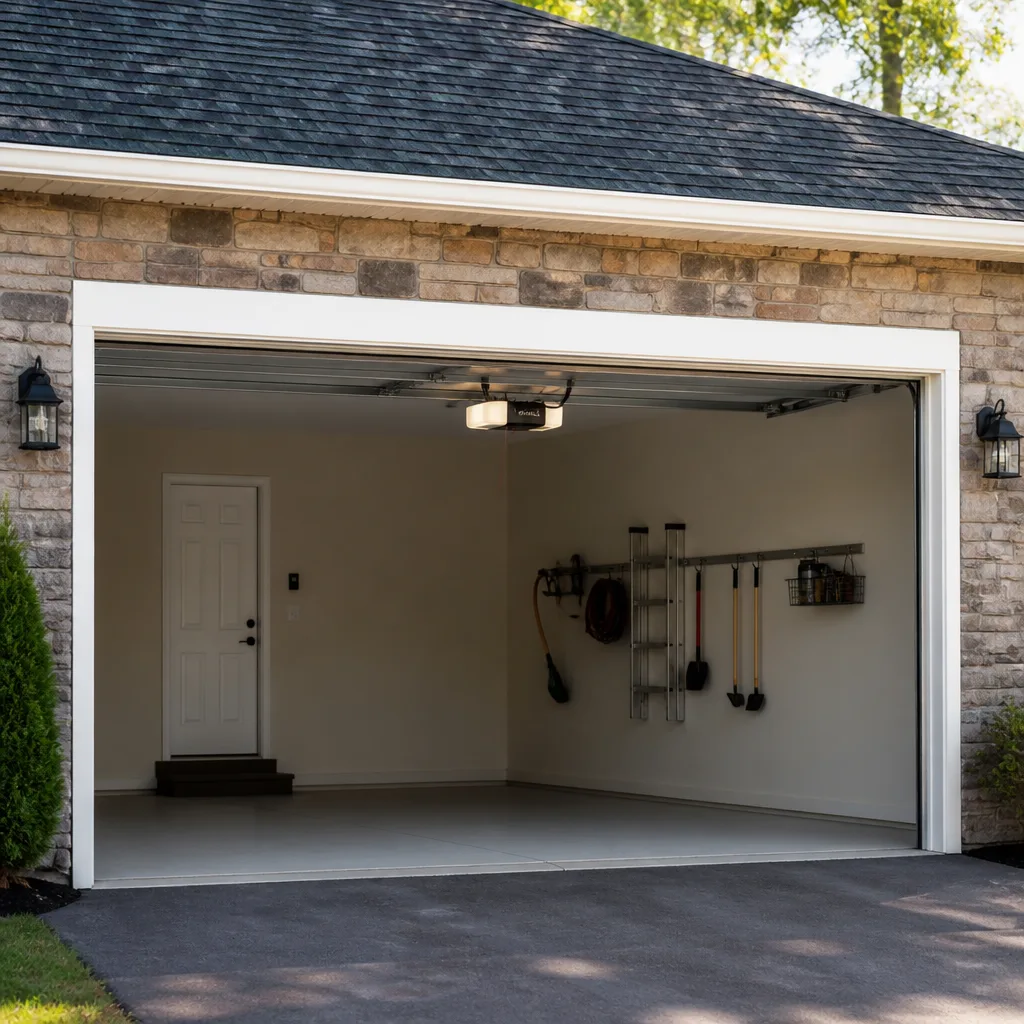 Chamberlain openers
Full 25-point door and opener safety check with every visit - springs, cables, rollers, tracks, and your LiftMaster or Chamberlain opener included
You get a price before we start. It does not change when the pro arrives.
Get your free estimateGarage Door Repair Maintenance Checklist for Waterbury Homeowners
Most garage door failures don’t announce themselves. They build quietly over months, then show up as a door that won’t lift on a cold morning. The single most overlooked item on nearly every checklist is lubricating the torsion spring, and it takes under two minutes with no tools. In our experience across Waterbury, the doors that fail suddenly are usually the ones where that one step was skipped. This guide lays out a task-by-task maintenance checklist built around how Waterbury doors actually wear: winter road salt tracked onto the bottom section, temperature swings that harden seals, and older spring setups in the city’s mid-century housing. You’ll learn what to check monthly, seasonally, and yearly, which lubricants hold up below freezing, and where to stop and call a technician.
Quick Answer
A garage door maintenance checklist for Waterbury homeowners should cover three frequencies: monthly (visual inspection, balance test, safety-reverse test, lubrication), seasonal (weather seal check before and after winter, track cleaning, hardware tightening), and annual (spring and cable inspection, roller assessment, opener force setting review). The tasks a homeowner can safely do involve looking, listening, and light lubrication. Anything involving torsion springs, cables, or the opener’s internal gearing needs a trained technician. Our technicians have up to 15 years of experience, and this checklist reflects the failure patterns we see on Waterbury doors.
Styles & brands we work with
- Raised-panel steel
- Carriage house
- Modern flush
- Full-view glass
- LiftMaster openers
- Chamberlain openers
Table of Contents
- Why Waterbury Doors Fail Differently
- The Monthly Checklist (15 Minutes)
- The Seasonal Checklist (Spring and Fall)
- The Annual Checklist (Once a Year)
- Lubricants That Work in Connecticut Cold
- Testing Auto-Reverse and Force Settings Yourself
- What You Can Check vs. What Needs a Technician
- When to Call a Professional
Why Waterbury Doors Fail Differently
Waterbury sits in a climate that punishes garage doors harder than the national average. Winters bring repeated freeze-thaw cycles, and the road salt that keeps streets passable gets tracked into garages on tires and boots. That salt settles on the bottom section and the bottom bracket, and it doesn’t just look bad. It accelerates corrosion on the steel and on the fasteners that hold the bottom bracket in place.
Temperature swings do the other half of the damage. A door that expands in a mild afternoon and contracts overnight pulls on its weather seal and its springs. The rubber seal hardens and cracks. The torsion spring, which is under constant tension, experiences thousands of small load changes across a Connecticut winter. Springs don’t break because they’re old. They break because they’ve cycled.
The housing stock matters too. Waterbury has a large share of homes built between the 1970s and 1990s, and many of those garages were fitted with torsion spring systems that are now well past their expected service life. If you’re not sure which type of spring your door uses, look above the door when it’s closed. A torsion spring is a horizontal shaft with coiled springs mounted on it. Extension springs run along the tracks on either side. Both types wear, but they wear in different ways and warn you in different ways.
The doors themselves span a wide range here, from builder-grade steel to premium brands like Clopay and Amarr found in the area’s larger homes. Each has its own weak points, which is why a brand-agnostic maintenance approach matters. When we look at a door, we’re looking at the mechanical system, not the label on it.
The Monthly Checklist (15 Minutes)
This is the routine that prevents most sudden failures. Do it on the same weekend each month and it becomes muscle memory. You don’t need tools for most of it.
- Visual walk-around. With the door closed, look at the springs, cables, rollers, and hinges. You’re looking for rust, fraying, or anything that looks bent. Cables should be taut and even. If one side sags, stop and call.
- Balance test. Disconnect the opener (the release handle hangs from the trolley), lift the door halfway by hand, and let go. A balanced door holds its position. A door that drifts down or slams up has a spring problem and needs a technician.
- Safety-reverse test. Place a two-by-four flat on the floor in the door’s path, close the door, and watch. The door should reverse on contact. If it doesn’t, adjust or call. (More on this below.)
- Photo-eye test. With the door open, wave your leg through the beam near the floor. The door should not close, or should reverse. If it keeps going down, the sensors are misaligned or dirty. Wipe the lenses with a dry cloth first.
- Listen. Run the door up and down. Squeaks, grinding, or a rhythmic thump point to dry rollers, a loose hinge, or a worn bearing plate.
- Lubricate the spring and the moving metal. One short spray along the torsion spring and a light pass on the hinges and roller stems. This is the two-minute step that heads off the majority of the failures we see.
If any of these steps surfaces something you can’t diagnose, don’t force it. A door that’s out of balance is a door that’s about to break a spring, and a broken torsion spring makes the door unsafe to operate by hand.
The Seasonal Checklist (Spring and Fall)
Waterbury’s two big transition points are the first hard freeze and the first thaw. Both put stress on the weather seal, the tracks, and the hardware.
Fall, before the first freeze
- Inspect the bottom weather seal for cracks, hardening, or gaps. A seal that’s lost its flexibility lets cold air and moisture in and lets salt-laden water pool against the bottom section.
- Check the threshold for ice dams and standing water. A frozen puddle under the door can rip a seal off.
- Tighten hinge and bracket bolts. Metal contracts in the cold and fasteners that were snug in summer loosen.
- Rinse the bottom section and the bottom bracket with plain water to remove salt residue before winter. Salt sitting on steel all season is the leading cause of corrosion we find on Waterbury doors.
Spring, after the thaw
- Recheck the weather seal. Winter cracking shows up in spring.
- Look for rust bloom on the springs, cables, and bottom brackets. Light surface rust can be cleaned and treated. Pitting on a spring or a frayed cable means replacement.
- Clear the tracks of grit and debris that collected over the winter. Wipe the inside of the track with a damp rag, not a lubricant.
- Retest balance and the safety reverse after any temperature-driven adjustment.
These two visits cover most of what Connecticut weather throws at a door. Skipping the fall pass is the most common reason a door fails in January, when the seal has already cracked and the fasteners are already loose.
The Annual Checklist (Once a Year)
Once a year, do a deeper pass. This is where you catch wear that monthly checks miss.
- Springs. Look for gaps, rust, or a stretched appearance. Torsion springs on 1970s – 1990s doors may be original. Even healthy springs have a finite cycle life. A matched pair is usually replaced together, since a pair that’s out of step puts uneven load on the shaft.
- Cables. Check for fraying, kinks, or slack. Cables under tension are dangerous, and a frayed cable can snap without warning. Don’t touch them; just look and call if something’s off.
- Rollers. Steel rollers wear flat spots; nylon rollers crack. Worn rollers make a door noisy and put strain on the opener. Check each roller in its hinge for play.
- Hinges and bearings. Look for elongation at the screw holes and listen for grinding at the end bearing plates.
- Opener. Review the force settings (see the section below) and check the belt or chain tension. A loose chain slaps on startup; a belt that’s too tight strains the motor. If your opener is a LiftMaster, Chamberlain, Genie, or Craftsman unit, the adjustment procedure is printed on the motor housing or in the manual. If you can’t find it, that’s a job for garage door opener repair.
- Door panels and hardware. Check panel alignment, the top section for separation, and the strut if you have one.
An annual pass takes about 45 minutes if you know what you’re looking for. It’s also a good time to write down what you find so you can compare year over year.
Lubricants That Work in Connecticut Cold
This is where a lot of advice online goes wrong. A lubricant that works fine in a mild climate can gum up in a Waterbury winter and cause more friction than it removes. The difference matters.
Use these
- White lithium grease (in a spray can). The standard for hinges, roller stems, and the torsion spring. It stays put and doesn’t run off in summer heat. It’s not ideal below zero, but it doesn’t gum the way heavier greases do.
- Silicone spray. Good for the weather seal, the bottom bracket, and the tracks. It protects rubber and metal without attracting grit. It won’t stiffen in the cold.
- Light machine oil. Fine for the opener’s chain or the trolley. A few drops, not a flood.
Avoid these
- Heavy automotive grease or wheel-bearing grease. Too thick. In sub-freezing temperatures it stiffens and can make a torsion spring sluggish, which is the opposite of what you want on the most heavily loaded part of the door.
- WD-40 as a long-term lubricant. It’s a decent cleaner and a light solvent, but it doesn’t stay where you put it. It evaporates and leaves the metal dry. Use it to loosen a stuck hinge, then follow with white lithium.
- Anything on the inside of the tracks. Tracks are meant to be dry. Lubricant collects dirt, the rollers skid, and the door gets noisy. Wipe tracks clean; don’t coat them.
The two-minute spring lubrication deserves its own line. A torsion spring that’s dry will squeal, then bind, then break. The sound is your warning. One short spray along the coil each month is the cheapest maintenance you’ll ever do on the system.
Testing Auto-Reverse and Force Settings Yourself
You can test the two safety systems on any major opener without special tools. Most homeowners never do, which is why openers that should reverse keep closing on people and pets.
The photo-eye (non-contact) test
The sensors are the small lenses near the floor on each side of the door, usually with a small light on each. With the door open, pass something through the beam (a leg, a broom handle) while the door is closing. The door should reverse immediately. If it doesn’t, check that each sensor’s light is on and steady, wipe the lenses, and realign them so the lights point at each other. If the lights still won’t settle, the wiring or the sensor needs a look.
The contact (force) test
Place a two-by-four flat in the door’s path, close the door, and watch. The door should reverse on contact with the board. It should not press down hard first. If the door pushes firmly on the board before reversing, the close-force setting is too high.
On the brands you’ll find in Waterbury garages
- LiftMaster and Chamberlain (they share the same platform) use a set of up and down force adjustments on the motor housing, plus travel-limit screws. On most models the force dials are small knobs. Turn a small amount, test, and adjust again. Never turn more than a quarter turn at a time.
- Genie models vary more. On older chain-drive units, force is set by a single knob on the end panel. On newer screw-drive units, it’s an electronic setting on the control panel.
- Craftsman openers, common in the city’s older homes, often use the same platform as their era’s Chamberlain units, so the adjustment looks familiar.
The one rule: test after every adjustment, and stop when the door reverses cleanly. If it won’t, or if the opener is a model you can’t identify, don’t keep twisting. A misadjusted force setting is a safety issue, and a tech can set it correctly in minutes.
What you should not test yourself
Never test a door’s balance while standing under it, and never reach into the springs or cables to check tension. Torsion springs and cables are stored energy. If a spring breaks while you’re near it, the energy releases all at once. Trained technicians use winding bars and controlled procedures for exactly this reason. If you suspect a spring problem, leave the door closed and call.
What You Can Check vs. What Needs a Technician
Knowing where the line is keeps you safe and saves you money. Here’s how we’d draw it.
Safe for homeowners
- Visual inspection of springs, cables, rollers, tracks, and seals from a distance.
- Lubricating the springs, hinges, and roller stems with white lithium or silicone.
- Wiping the tracks clean and clearing debris.
- Testing the photo-eye and safety reverse with a board.
- Tightening visible hinge screws and bracket bolts (hand tight, not over-torqued).
- Cleaning salt and grit off the bottom section and bracket.
Needs a technician
- Any repair involving torsion springs or extension springs, including replacement and balance adjustment.
- Any cable work. Cables under tension can cause serious injury.
- Replacing rollers, hinges, or bearing plates if the door is under tension.
- Adjusting the opener’s internal force, travel, or gear assembly when you can’t find the documented procedure.
- Panel replacement or realignment after impact.
- Any door that won’t stay closed, won’t stay open, or makes a loud bang on its own.
The general rule: if a task involves reaching into the tension side of the door, it’s a technician job. If it involves looking, wiping, or spraying the outside of a component, you can do it. If you’re not sure which side you’re on, ask before you touch it. Safety is the reason to call garage door repair, not a last resort.
Common Mistakes to Avoid
- Using WD-40 as the only lubricant. It cleans but won’t protect. In a Waterbury winter, a door lubricated only with a light solvent dries out and stiffens. Follow with white lithium.
- Greasing the tracks. Tracks are meant to be dry. Grease collects grit, the rollers skid, and the door gets noisier, not quieter.
- Skipping the fall seal check. A seal that looks fine in October can crack in the first freeze. Check it before the cold, not after.
- Letting salt sit on the bottom section all winter. Road salt tracked into the garage corrodes steel and the bottom bracket. A quick rinse once a month makes a real difference.
- Turning up the opener force to fix a stiff door. The door is stiff because something else is wrong, usually a dry or failing spring. Raising the force just makes the failure louder.
- Testing the balance while standing under the door. A door that drops on you is a serious injury. Test from the side, and only after the opener is disconnected.
- Assuming a new opener fixes an old door. On a door with worn springs or rollers, the opener works harder and fails sooner. The door comes first.
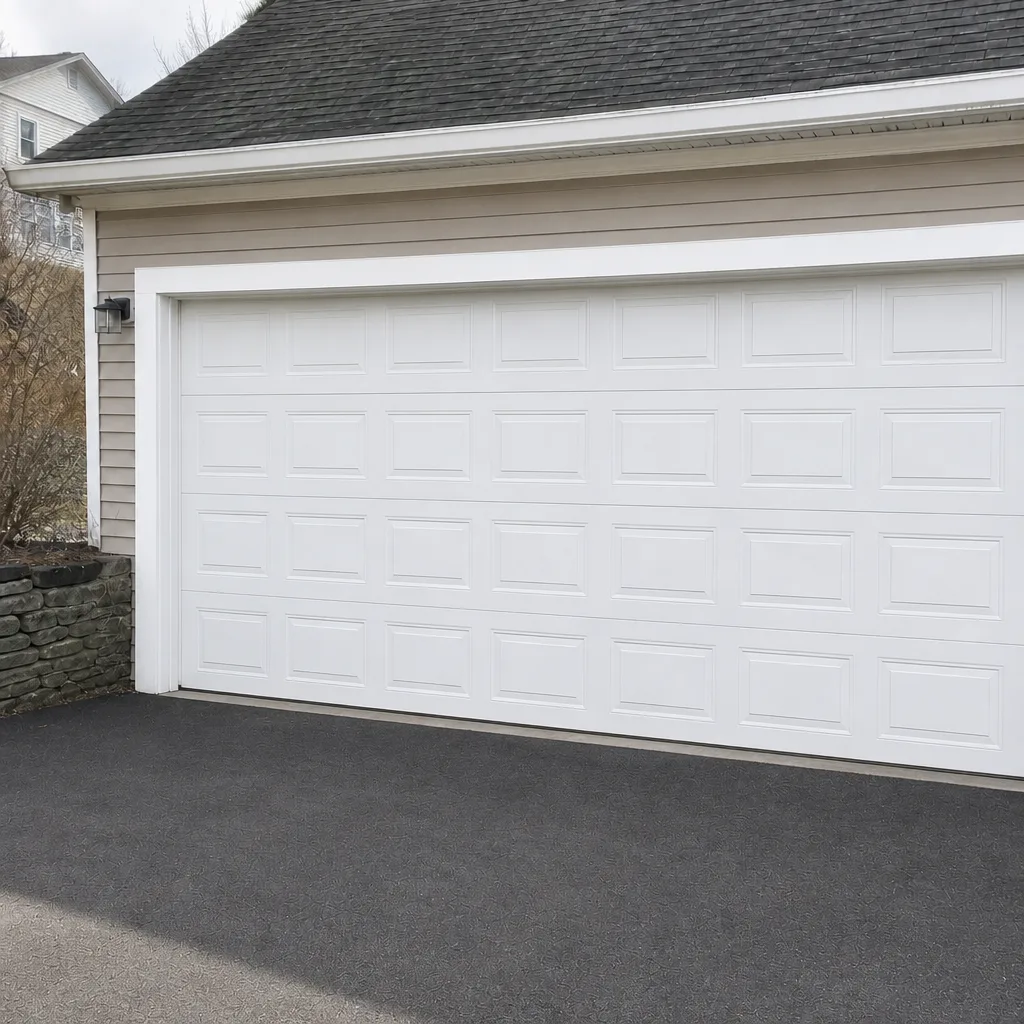
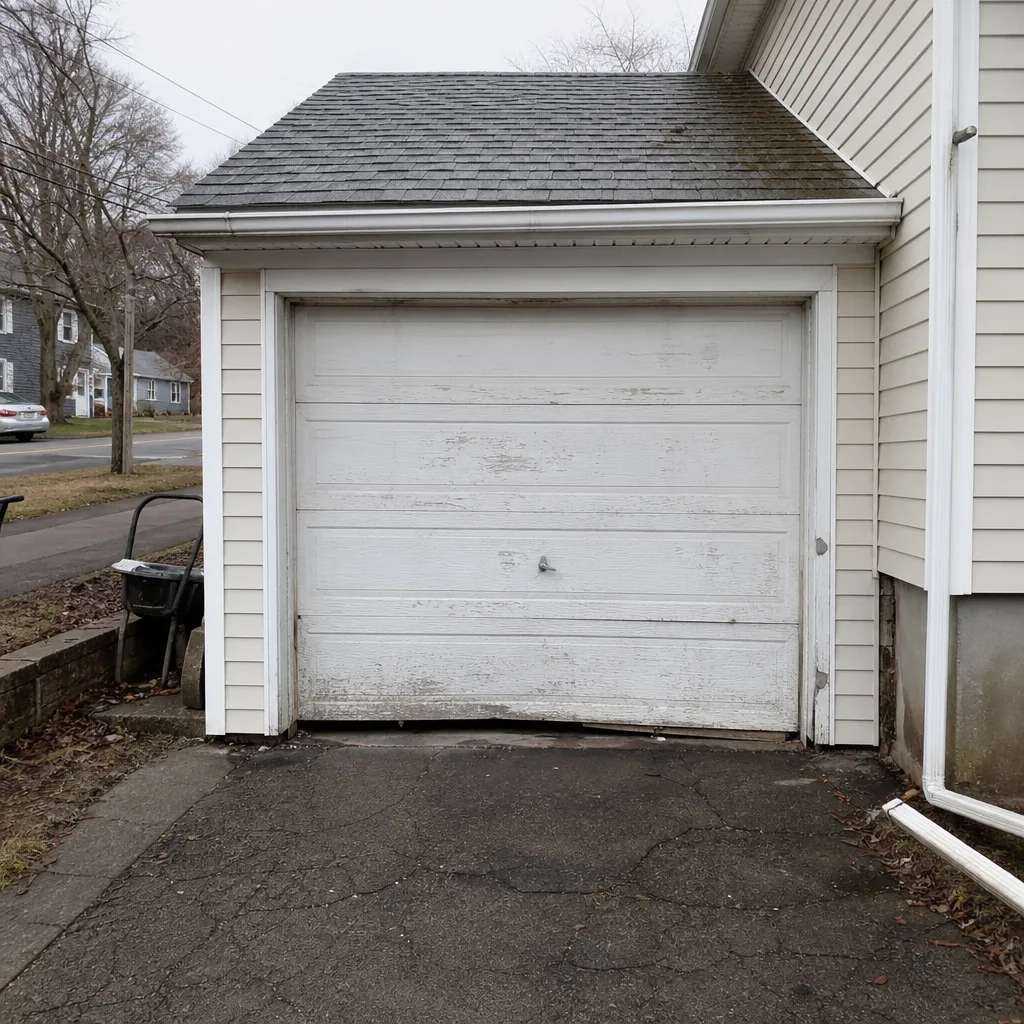
See the difference
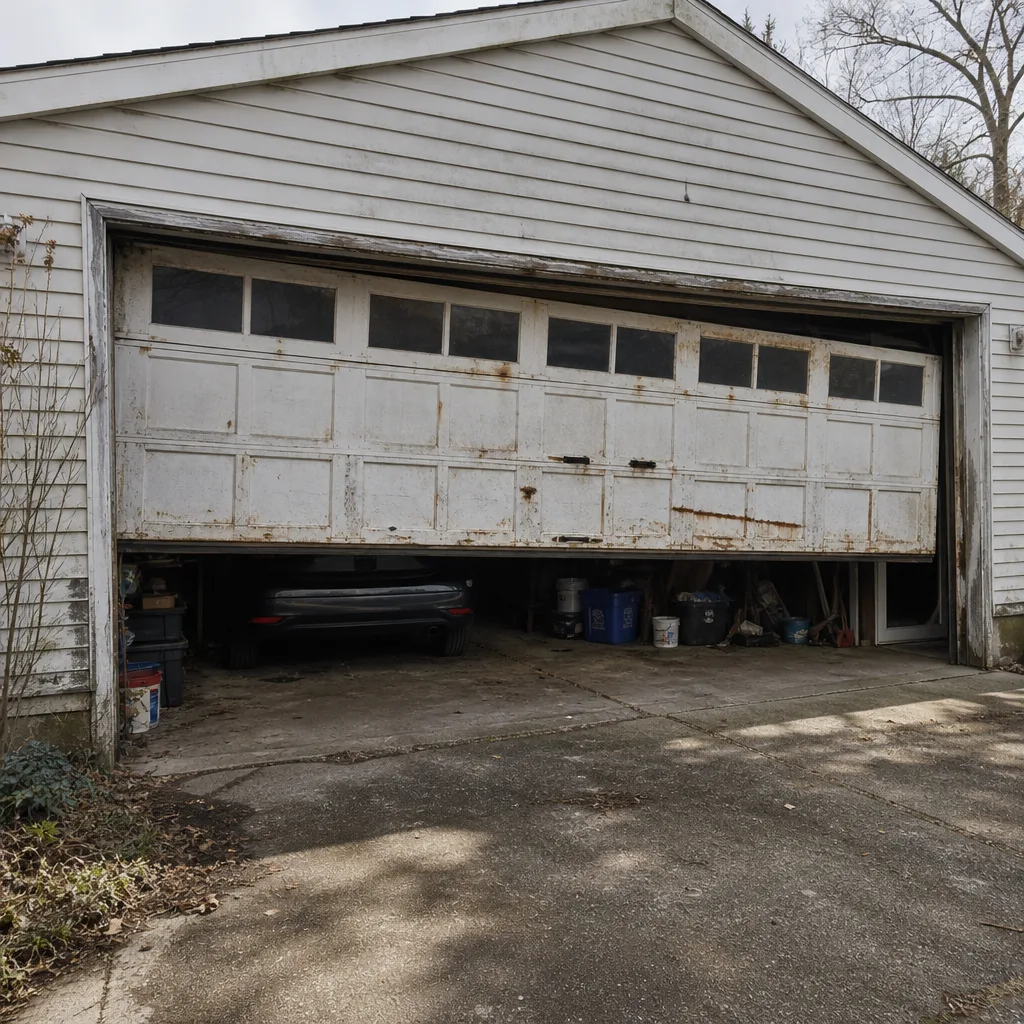 Before
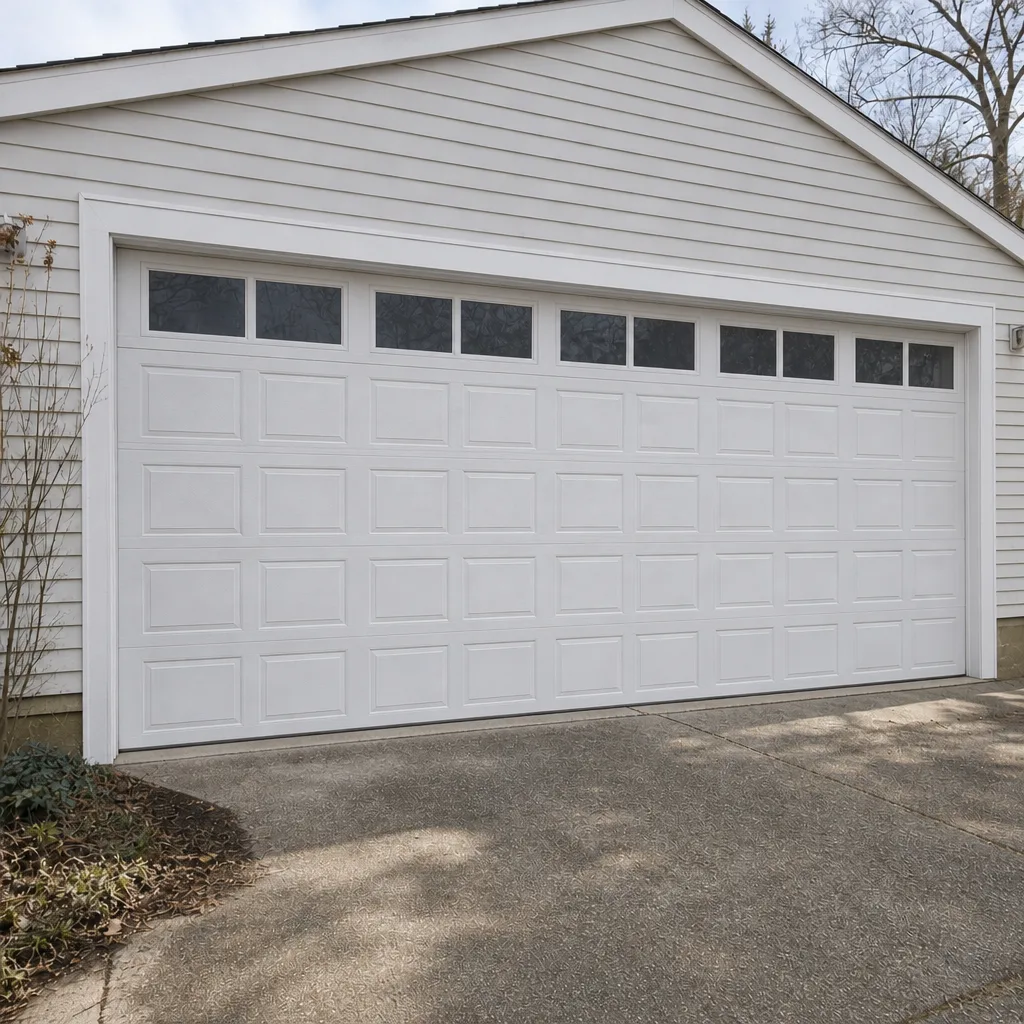 After
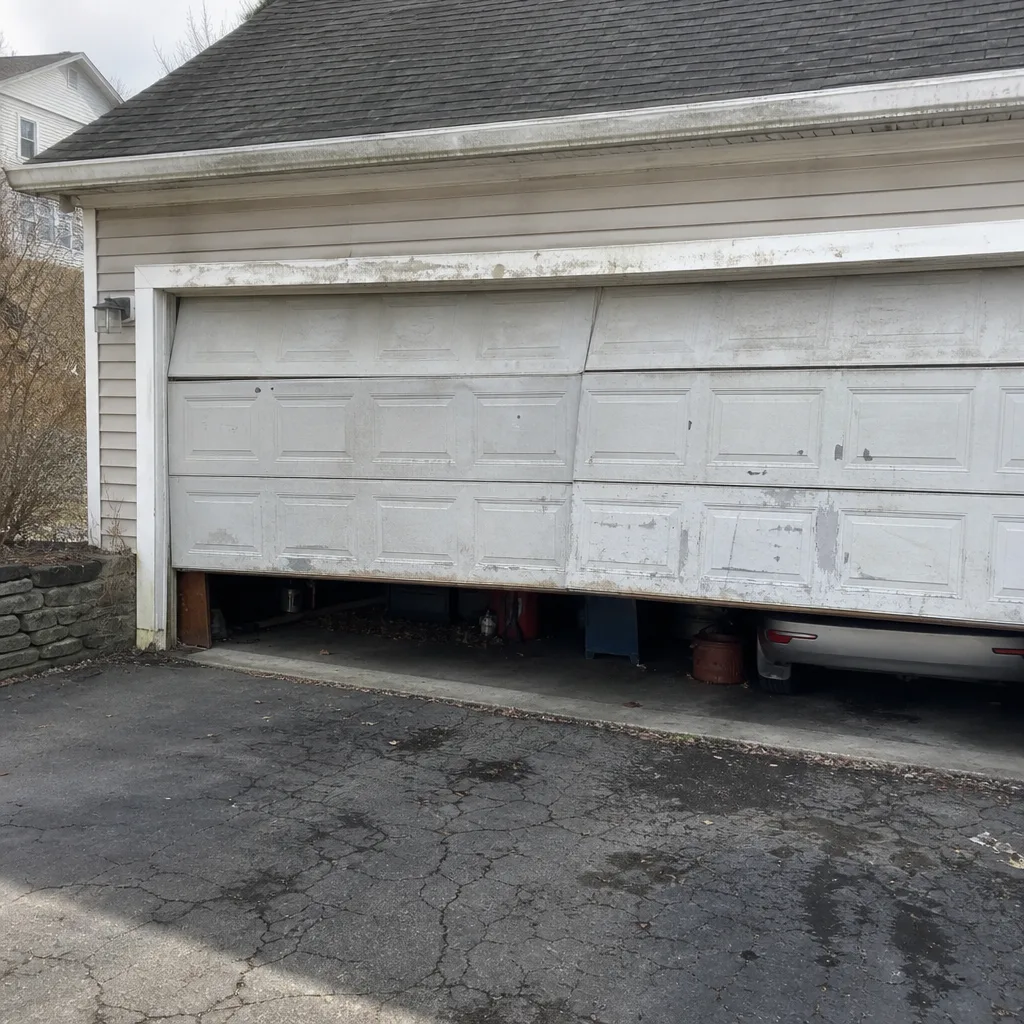 Before
 After
 Before
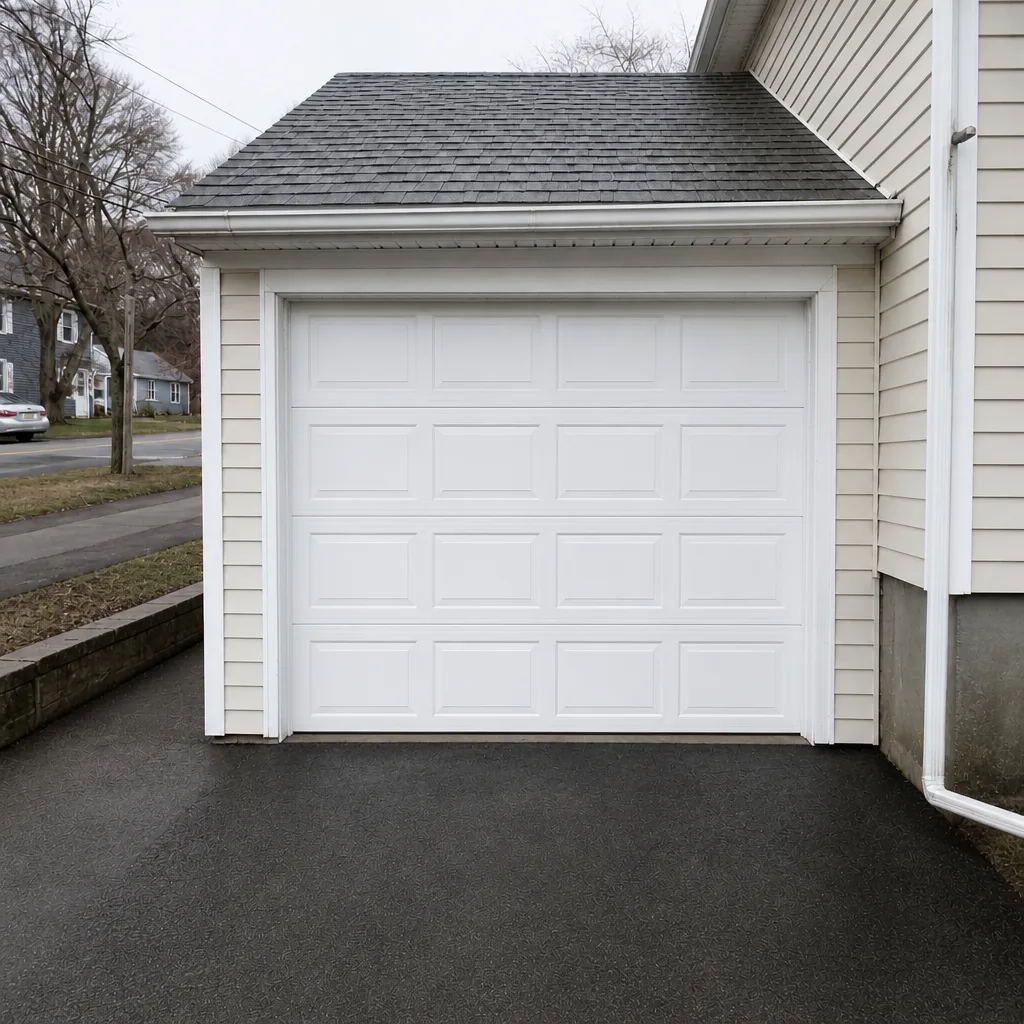 After
When to Call a Professional
Call a professional if the door won’t balance, if a spring shows a gap or a stretch, if a cable is frayed or slack, if the door reverses on its own, or if you hear a loud bang from the garage. Also call if the safety reverse fails after you’ve cleaned the lenses and checked the alignment, if the opener’s chain or belt keeps loosening, or if the door has taken a hit and a panel is out of line. Those are all jobs that reward a trained set of hands. Ambassador Garage Door Repair offers free estimates in Waterbury. Call (844) 783-9136 to book one, and read on for the questions we hear most.
Frequently Asked Questions
Monthly for the visual and safety checks, twice a year for the seasonal seal and hardware pass, and once a year for a deeper spring, cable, roller, and opener review. Waterbury’s freeze-thaw cycles make the fall and spring passes more important than the annual one; a door that skips them tends to fail in January.
Yes. Spraying a light coat of white lithium grease along the outside of the torsion spring is safe and takes under two minutes. Don’t loosen, wind, or touch the spring’s end hardware. If the spring shows a gap, rust pitting, or a stretched look, stop and call a technician.
Cold thickens lubricant, contracts metal, and stiffens the weather seal. A door that’s noisy only in winter is usually dry on the hinges and roller stems, or running on a lubricant that’s too heavy for the temperature. White lithium and silicone spray solve most of it. If the noise is a grinding from the springs or the opener, that’s a technician call.
A dry or worn torsion spring. Springs under constant tension fail without much warning once they’ve cycled enough times, and lubrication is the one maintenance step that meaningfully slows the wear. A door that’s been quiet and suddenly won’t lift, or that makes a loud bang, is almost always a spring. Call before you try to lift it.
Only if you can’t find the documented procedure for your model. On LiftMaster, Chamberlain, and most Craftsman units, the force and travel adjustments are on the motor housing and you can test them with a two-by-four. On older Genie units and some models, the settings are less obvious. If a quarter-turn adjustment doesn’t get the door reversing cleanly, stop and call.
The core tasks don’t change by brand, but the weak points do. Clopay and Amarr doors tend to have specific panel and hardware considerations, while the opener side varies by LiftMaster, Chamberlain, Genie, or Craftsman. A checklist that covers the whole system, door and opener, is the one that keeps the door working.
The Bottom Line
Most garage door failures are predictable. A monthly visual pass, a two-minute spring lubrication, a fall seal check, and an annual spring and opener review catch the wear before it becomes a breakdown. In Waterbury, the two local factors that matter most are road salt tracked onto the bottom section and the freeze-thaw cycle that cracks seals and stresses springs. Handle the parts you can safely reach, and leave springs and cables to a technician. If anything on this checklist turns up a problem you can’t diagnose, call (844) 783-9136 for a free estimate. We answer 24/7. Fast dispatch from 7am to 7pm, Sunday through Friday. We work on whatever’s already in your driveway, from the opener to the door itself.
Written by the team at Ambassador Garage Door Repair.