
Last updated November 15, 2026
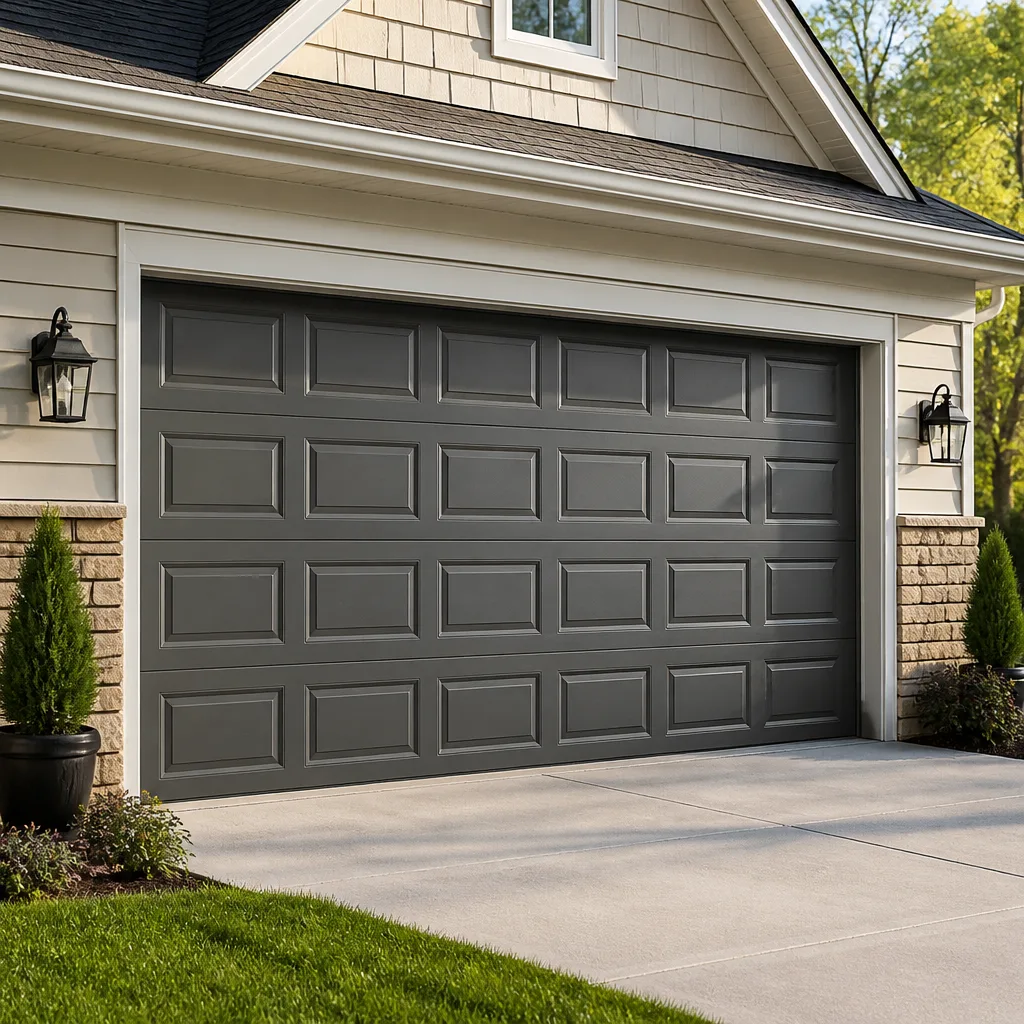 Raised-panel steel
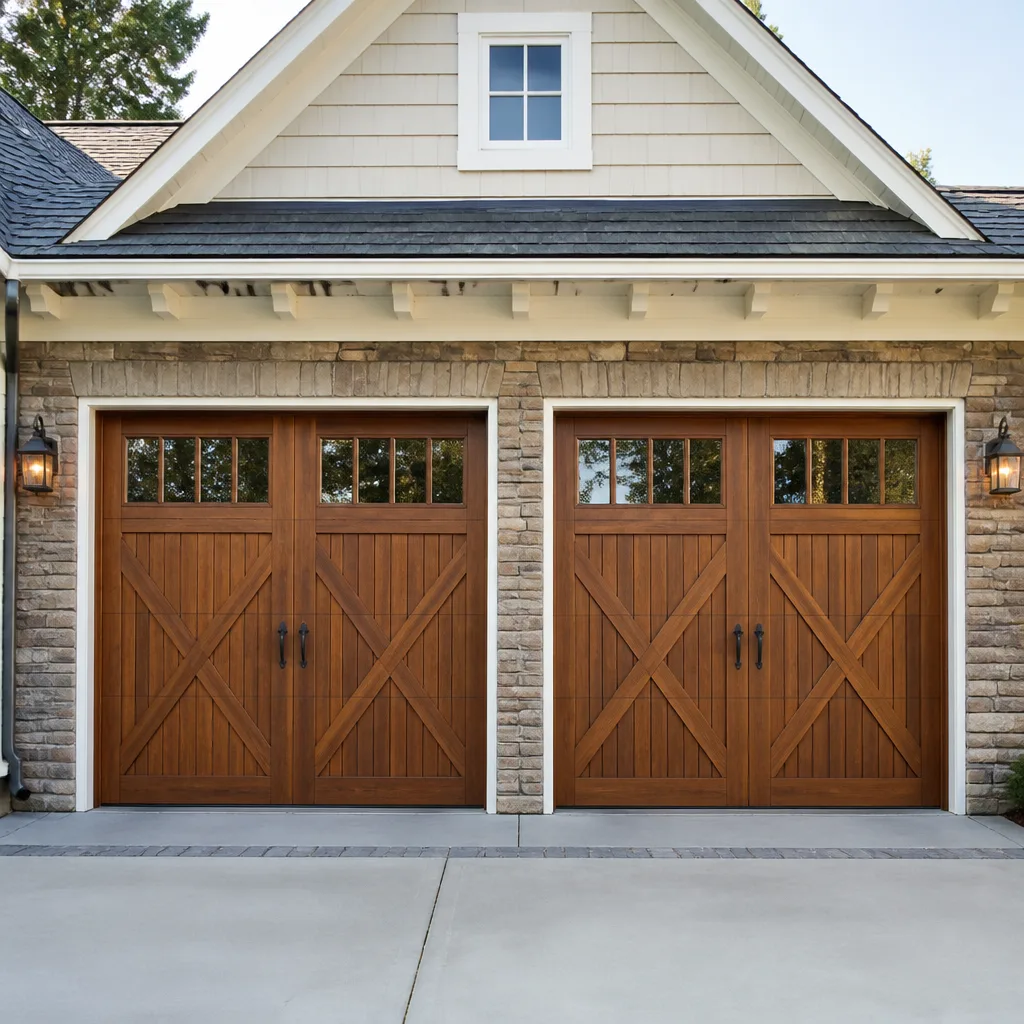 Carriage house
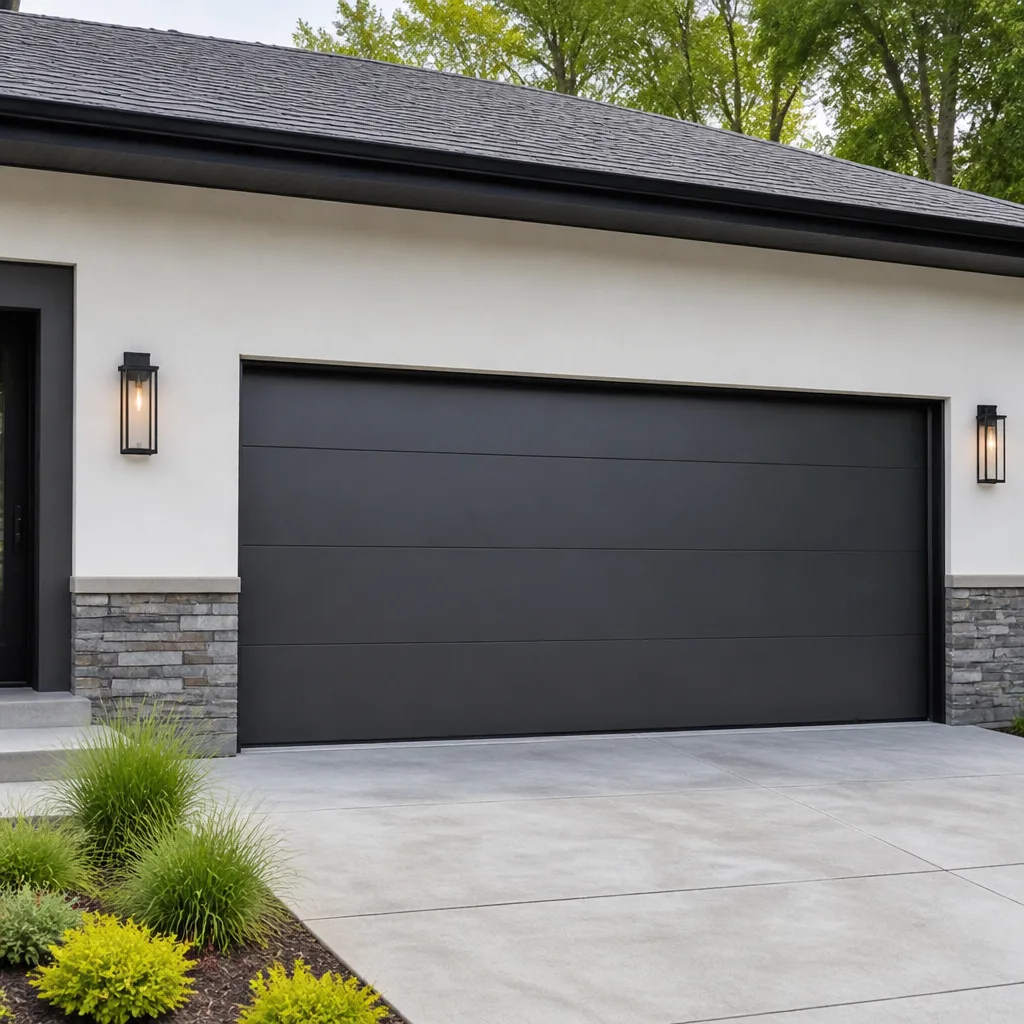 Modern flush
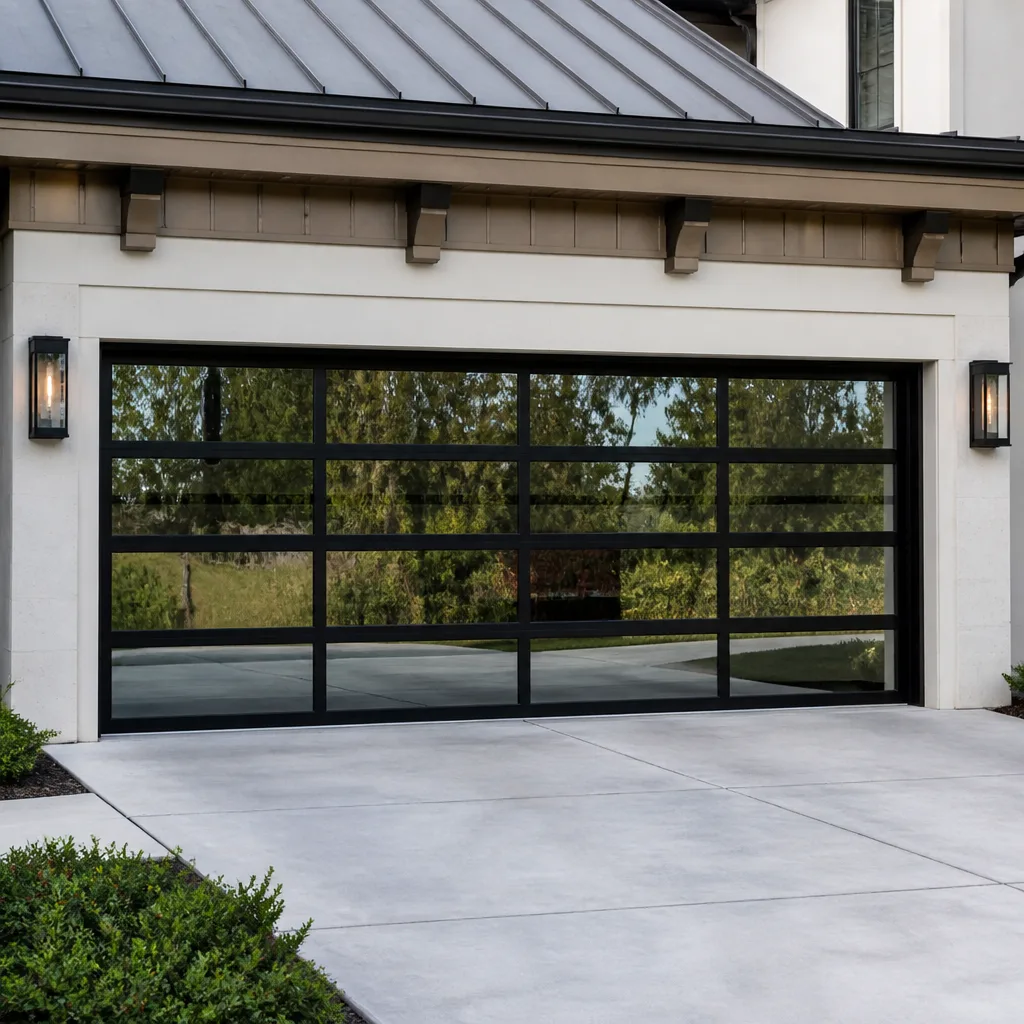 Full-view glass
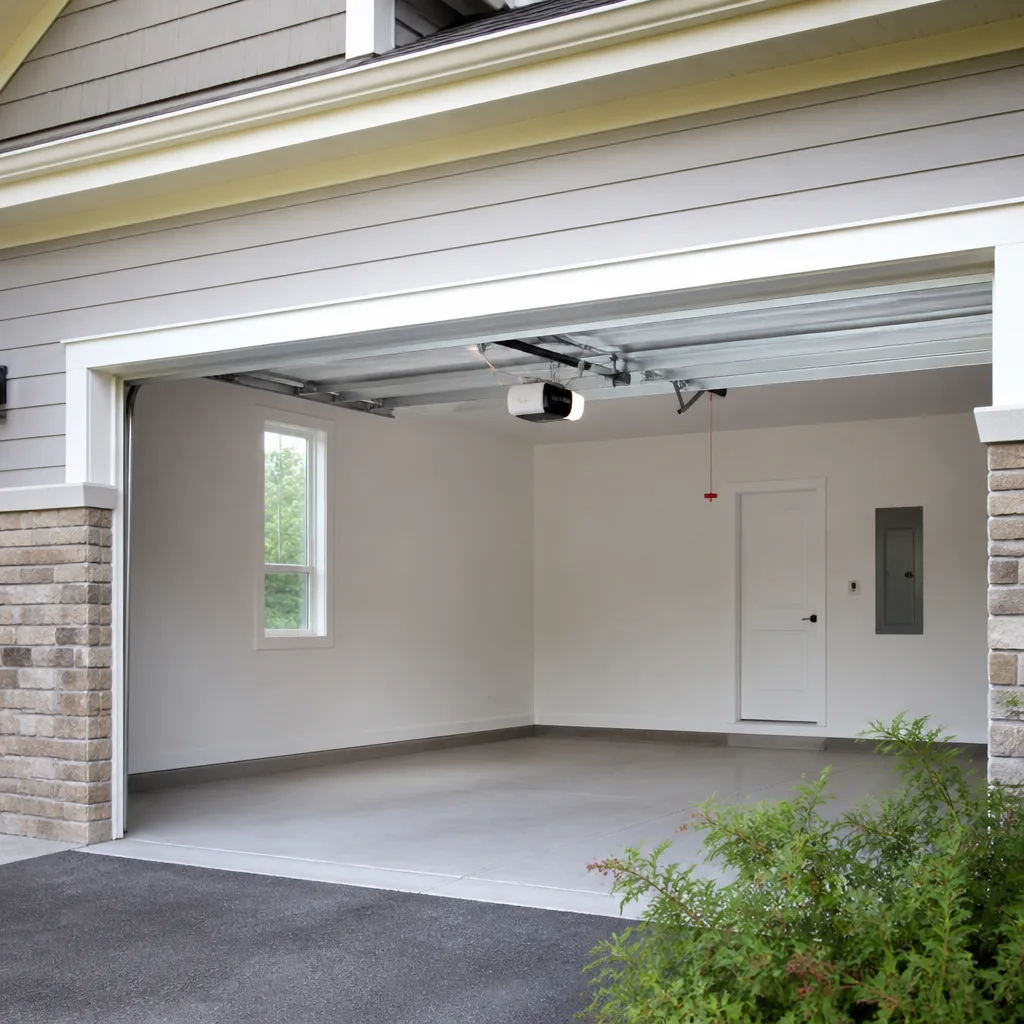 LiftMaster openers
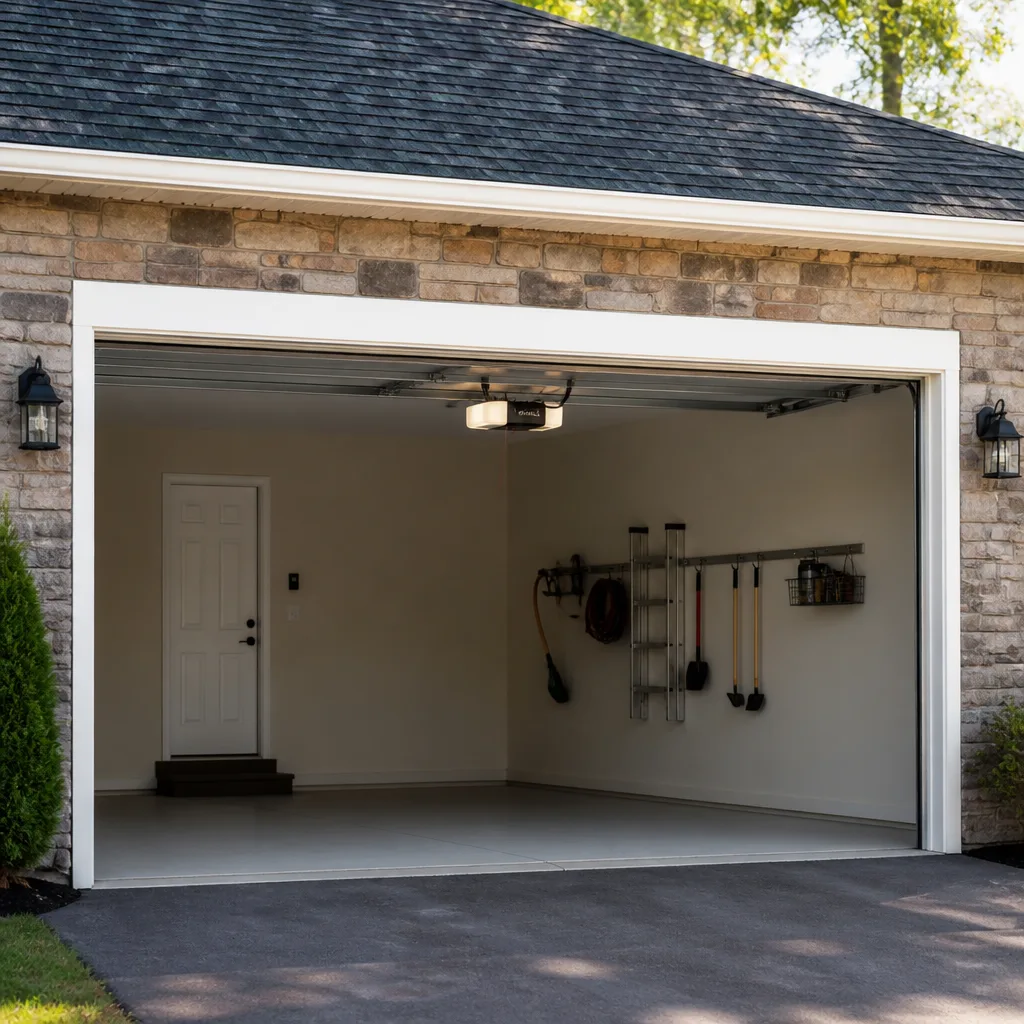 Chamberlain openers
Full 25-point door and opener safety check with every visit - springs, cables, rollers, tracks, and your LiftMaster or Chamberlain opener included
You get a price before we start. It does not change when the pro arrives.
Get your free estimateGarage Door Warning Signs: A Waterbury Homeowner’s Reference Guide
A garage door that hesitates for two seconds before it closes isn’t a quirk. It’s often the opener’s force sensor reporting that a spring is losing tension, and the window between that first hesitation and a dead door is usually weeks, not months. Most homeowners in Waterbury miss it because the door still opens. It still works, so it gets filed under “keep an eye on it,” and then a torsion spring snaps on a Tuesday morning with the car on the wrong side. This guide translates the specific noises, movements, and visual cues you’ll see on your door into plain language, so you know which signs are safe to watch and which mean stop using the door today.
Quick Answer
The clearest warning signs of a failing garage door are grinding or popping noises during travel, a door that reverses before it touches the floor, visible gaps or bends in the springs and cables, and rollers or tracks that have pulled loose from the wall. Any of those means the door or opener is already in a failure cycle, not normal wear. Snapped springs, frayed cables, and bent tracks are stop-use-now conditions. Our technicians have up to 15 years of experience, and the pattern is almost always the same: the door warned first, and the warning got ignored.
Styles & brands we work with
- Raised-panel steel
- Carriage house
- Modern flush
- Full-view glass
- LiftMaster openers
- Chamberlain openers
Table of Contents
- Quick Answer
- What Each Garage Door Noise Is Telling You
- Visual Warning Signs on Springs, Cables, Rollers, and Tracks
- Reading Your Opener’s Behavior as Diagnostic Data
- Springs and Cables: The Stop-Use Signs
- How Waterbury’s Winters and Summers Stress Your Door System
- The Compounding Failure Pattern: Why a $200 Fix Becomes a $900 One
- Watch vs. Stop: A Decision Reference
What Each Garage Door Noise Is Telling You
Sound is the earliest diagnostic tool you have, and it maps to specific hardware. A door that sounds different this month than it did last month is telling you which component is under stress. When we send a technician out on a garage door repair call in Waterbury, the first thing we do is listen to the door travel – the noise profile identifies the problem faster than visual inspection.
Here’s how to translate what you’re hearing:
- Grinding: Typically dry or worn rollers, or a bent track forcing the rollers against the steel. If the grinding is coming from the opener head (the unit on the ceiling), it’s often gearbox wear, common on older LiftMaster and Chamberlain units.
- Popping or snapping: A torsion spring losing tension and then slipping its wind. This is the sound that precedes a spring failure by weeks. Stop using the door and get it inspected.
- Scraping along the top of the door: Usually a sagging track or a panel that has shifted its track alignment. Left alone, the panel will bind and eventually crack.
- Banging at the bottom of the travel: The opener running past its limit switch, or a broken safety sensor, causing the motor to drive the door into the floor. Both stress the opener’s gearbox and the door frame.
- Rattling that didn’t used to be there: Loose hinges, roller stems, or track fasteners backing out of the wall. This one is the cheapest to fix early and the most expensive to ignore.
Note what each sound does in sequence: noise starts at one spot in the travel, moves, then becomes constant. That progression tells you the failing component has shifted. Our technicians have up to 15 years of experience working on Genie and LiftMaster operators specifically, and they’ll tell you the opener rarely fails first – it fails second, after the door has been fighting something.
Visual Warning Signs on Springs, Cables, Rollers, and Tracks
Walk out and look at your door once a season. Ten minutes with a flashlight – no tools, no disassembly – catches almost every warning sign below. What separates normal from imminent failure is usually a matter of position and tension, not visible damage.
Normal wear (safe to monitor)
- Rollers showing black dust on the stems and a slightly flattened tire tread. That means the nylon is wearing. Have them replaced at the next service call.
- Light rust on the paint of the springs. Cosmetic unless the spring itself is stretched or gap.
- Fastener heads with a faint rust bloom, so long as they haven’t backed out.
Imminent failure (stop use, call now)
- A torsion spring with a visible gap in the coil. That spring has snapped and the door is being held up by whatever tension the other spring has left, or by nothing.
- A cable that has jumped off its drum or looks frayed anywhere along its length. Frayed cables fail without warning.
- A track that has pulled away from the wall by more than a quarter inch at any bracket.
- A roller stem that’s popped out of its hinge or its bracket.
- Any door panel that looks visually uneven at the seams. That means the door has twisted or a hinge has failed, and the door is riding out of its track.
If any of the stop-use signs is present, don’t cycle the door – not even to look at it. The door is under load, and a finger or a shoulder is not the tool for holding a hundred-plus pound panel. Call a trained technician instead.
Reading Your Opener’s Behavior as Diagnostic Data
Your opener is a sensor package that reports through behavior, not through a screen. What it’s doing on each cycle is data. Once you know how to read that data, you can tell the difference between a small adjustment and an opener heading toward replacement.
Here’s the behavioral reference:
- The door moves slower than it used to. On a belt or chain drive, slowing is usually the opener compensating for increased resistance. Something on the door – a stiff spring, a dry hinge, a binding roller – is fighting the motor. Fix the door first.
- The door stops and reverses after hitting the floor. That’s the force sensor or the travel limit, both of which are safety functions. A door that reverses before it touches is doing its job. A door that reverses after it touches means the bottom seal has compressed or the limit switch has drifted, and the opener is safe to leave engaged but the adjustment shouldn’t wait.
- The door stops partway down and stays put. Usually a safety sensor (the beam across the door opening) that’s misaligned, dirty, or blocked by a hanging cord or a car tire. Before you assume the opener is failing, wipe the sensor lenses and check the beam alignment.
- The opener runs but the door doesn’t move. That’s usually a stripped drive gear on a Chamberlain or Craftsman unit, or a snapped drive chain. The motor is fine; the drive train isn’t. Our garage door opener repair service deals with this specific failure more than any other, because it’s the component homeowners can least diagnose on their own.
- The opener clicks but the door doesn’t respond to remotes. That’s usually the logic board or the receiver, not the door. Stop here and let a technician verify the diagnosis with a meter.
The point is: an opener that misbehaves is not necessarily an opener that needs to be replaced. It is often a messenger for a door component that’s been failing quietly.
Springs and Cables: The Stop-Use Signs
Springs and cables are the highest-energy components in your garage door system, and they are the only ones you should never touch. A torsion spring on a standard two-car door stores enough energy to seriously injure a person. A cable under tension acts like a whip if it cuts loose. This is the one part of the system where “call someone” is not a courtesy line – it’s the safe answer.
What a trained technician looks for on a spring inspection:
- Coil gap. Any visible separation in a torsion coil, even a hairline, means the spring has failed.
- Stretch. Extension spring systems (common on older doors and on many Wayne Dalton models) stretch over time – if the spring shows a bow or a curve, it’s past its service life and should be replaced as a matched pair.
- Fresh rust at a coil junction. That’s an early fracture point. A spring at that stage is on borrowed time.
- Cable drum alignment. If a cable has walked off its drum, the door needs to come down and the drums need to be reset by a technician.
- Bottom bracket wear. On extension spring systems, the bottom bracket is under enormous load and is often the failure point. A cracked bracket is a stop-use condition.
If a spring is visibly failing, keep the door closed and unlocked only if you need access. Do not open it manually – a door with a failed spring can drop fast enough to cause serious injury. We work on the full door and opener assembly, from the Ambassador Garage Door Repair side of the system to the operator, and a technician will confirm spring status in a free estimate before any work begins. Our technicians are state-licensed and insured, and you’ll see the written estimate before we start.
How Waterbury’s Winters and Summers Stress Your Door System
New England weather works a garage door harder than most homeowners realize, and it accelerates the warning signs above in specific ways. Waterbury’s winters are hard on metal and wood: repeated freezing and thawing near the door seal, combined with snow and ice packed along the bottom of the door, works the bottom seals and puts constant stress on the spring at the bottom of the door travel. If your door has felt heavier to open in January and easier in May, that’s the cycle doing its thing.
The specific stress points our technicians see most in Waterbury:
- Bottom seal freeze: A frozen seal glues the door to the floor, and the opener fights it on every cycle. That load goes straight into the spring and the opener gearbox.
- Frozen hinges and roller stems: Lubricant that was fine in October stiffens in cold. The door still works, but it’s fighting itself on each cycle.
- Expansion and contraction on track brackets: Wood framing moves a lot in a New England year, and a bracket that was snug in fall can back out by spring. That’s the source of most “my track looks bent” calls.
- Summer heat on the opener: A garage interior that hits 100-plus in July pushes older opener components (capacitors, gearboxes) harder. If your opener struggled last summer, it will struggle again this one.
- Ice damming near the bottom panel: Water that pools at the base of the door panel and freezes repeatedly will eventually pull the paint and start the steel rusting at the seams.
Timing your inspection matters here. A door that passes a check in July can fail its check in January because of nothing more than the temperature. A fall tune-up – roller check, seal inspection, track alignment, spring tension verification – is cheap insurance against a winter failure when you most need the door to work.
The Compounding Failure Pattern: Why a $200 Fix Becomes a $900 One
Garage doors fail in cascades, not in single events. That’s the core pattern we’ve seen on thousands of calls, and it’s why we open this guide with the “hesitation for two seconds” point. The compounding failure pattern is this: the door gives you a signal (a noise, a slowdown, a roller issue), nothing catastrophic happens, the signal gets logged as “keep an eye on it,” and then the small problem has time to damage the components around it.
Here’s a typical sequence:
- Week 1: A roller stem loosens. The door sounds slightly rough on one side. Nothing fails.
- Week 3: The door has been traveling slightly out of true. The opening edge of a panel starts scraping the track. Still working.
- Week 5: The scraping panel binds, the opener’s force sensor sees increasing resistance and adjusts its own force limit upward. The door still moves; the adjustment masks the damage.
- Week 8: The binding roller forces the track out of alignment. A hinge cracks. The spring, which has been carrying the load of the drag, loses tension.
- Week 9: Spring failure. The door drops or stops in mid-travel. Now you’re buying a spring, a set of rollers, a hinge, a track section, and possibly a new opener because the gearbox was working overtime for two months.
What was a roller replacement in week one is a full-system repair by week nine. That’s the cascade – the same failure that costs a small amount on day one costs multiples of that at day sixty. The only way to stop it is to act on the first signal instead of the loudest one.
This is why we push a diagnostic approach rather than a “wait until it stops working” approach. A free estimate is the cheapest part of the whole job.
Watch vs. Stop: A Decision Reference
Some warning signs are safe to schedule at your convenience, and some mean the door should not cycle again until a technician has inspected it. Here’s the split.
Safe to monitor and schedule
- Mild new rattling on one side of the door
- Rollers showing dust or slight flattening at the tire line
- Rust bloom on fasteners that haven’t backed out
- A door that closes slightly slower than it used to
- Cosmetic rust on spring paint
Stop use – call a technician before the next cycle
- A visible gap in a torsion spring, or a snapped extension spring
- Any frayed or off-drum cable
- A door that hangs visibly crooked at the top or bottom edge
- A bent or pulled-away track section
- A roller stem popped out of its bracket
- Any noise that sounds like metal-popping at the spring
- An opener that reverses with force or runs past its limit
When in doubt, err toward calling. Our technicians have up to 15 years of experience working on the door and opener together as a system – Waterbury homeowners can get a free estimate to answer the “should I be worried” question without the sales pressure. A technician will tell you whether to schedule work now or wait until a better time. That determination belongs on the diagnosis, not on the calendar.
Common Mistakes to Avoid
- Watching for a total failure instead of acting on the first sign. A garage door almost never stops working without warning. It gives you weeks of warnings first. Treating “it still opens” as “it’s fine” is the single biggest reason repair bills climb.
- Lubricating a track that’s out of alignment. Grease hides the symptom – a bent or pulled-away track – and lets the door damage itself in the interim. Fix the track before you lube anything.
- Turning up the opener’s force setting. That force limiter is a safety function. Bumping it higher to make a stiff door move is masking the actual problem, and it removes your protection against a door that comes down on something.
- Treating winter stiffness as normal. Cold makes a door a bit slower, but a door that won’t open in February because the seal is frozen has been carrying that load since December. Get it checked before the second freeze cycle.
- Ignoring your door’s own brand. A Clopay door and a Wayne Dalton door age differently. A LiftMaster opener and a Genie opener sound different when their gearboxes wear. Knowing the brand makes the diagnosis faster and prevents the wrong parts.
- Letting one contractor do the door and another do the opener. The opener and the door fight each other when one is out of spec, and the diagnosis gets split between two companies. One point of contact gets you a faster, cleaner answer.
- Doing spring or cable work yourself. No. This is the one part of the trade where general contractor “I can handle it” instinct is genuinely dangerous. Springs and cables are handled by trained technicians, full stop.
See the difference
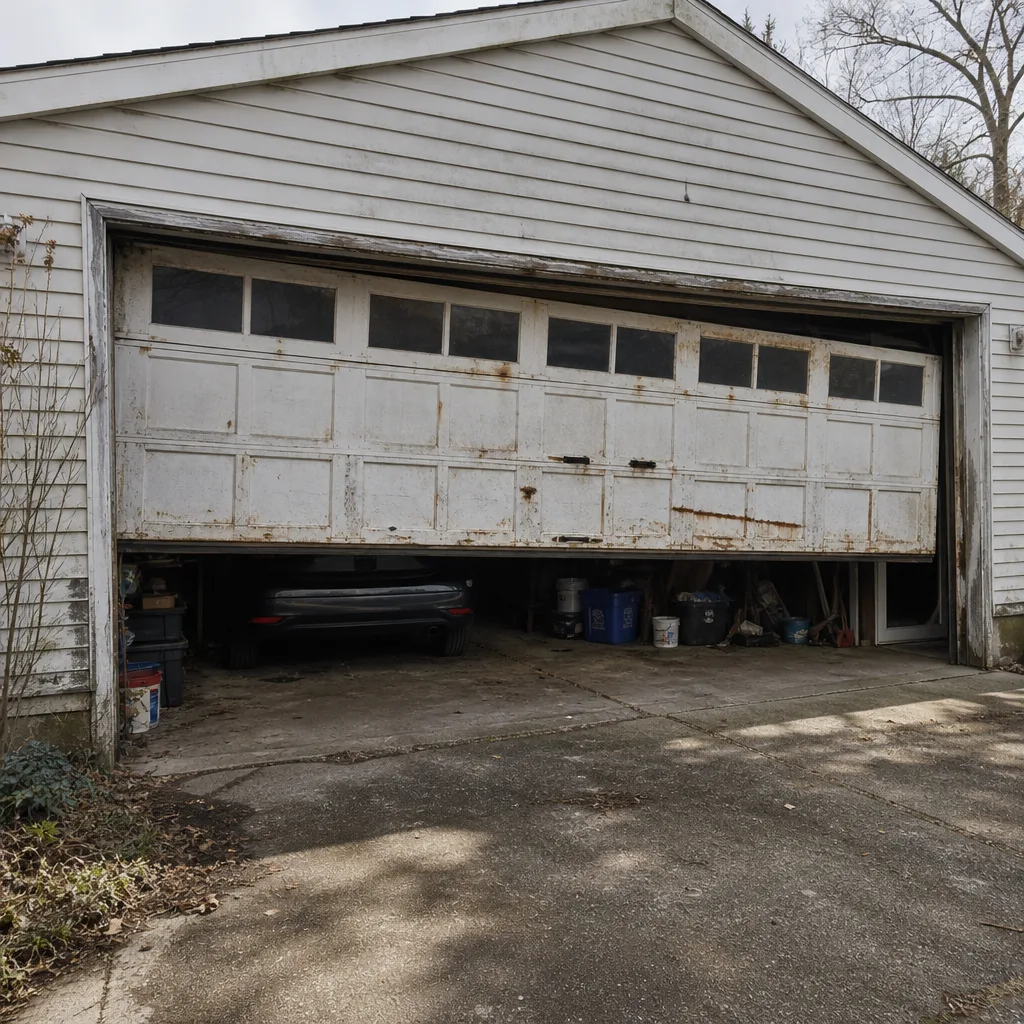 Before
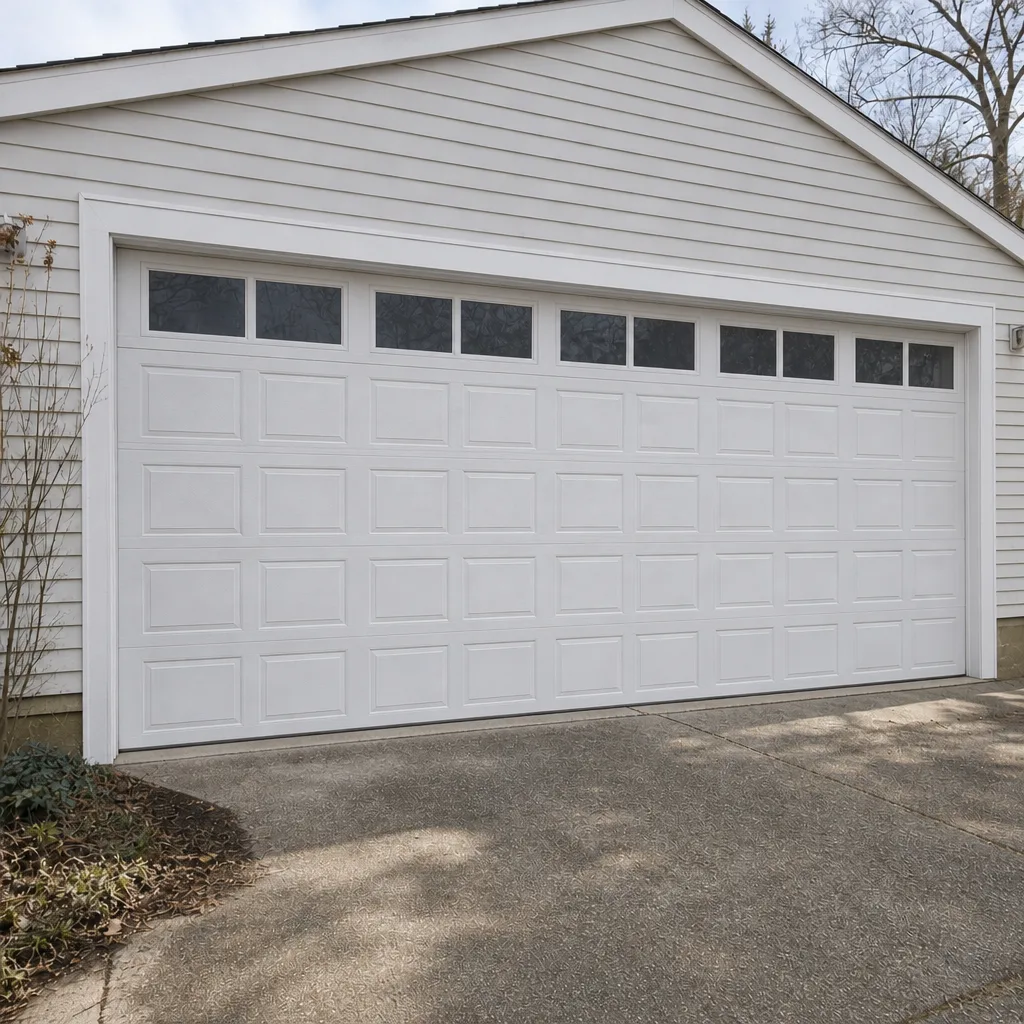 After
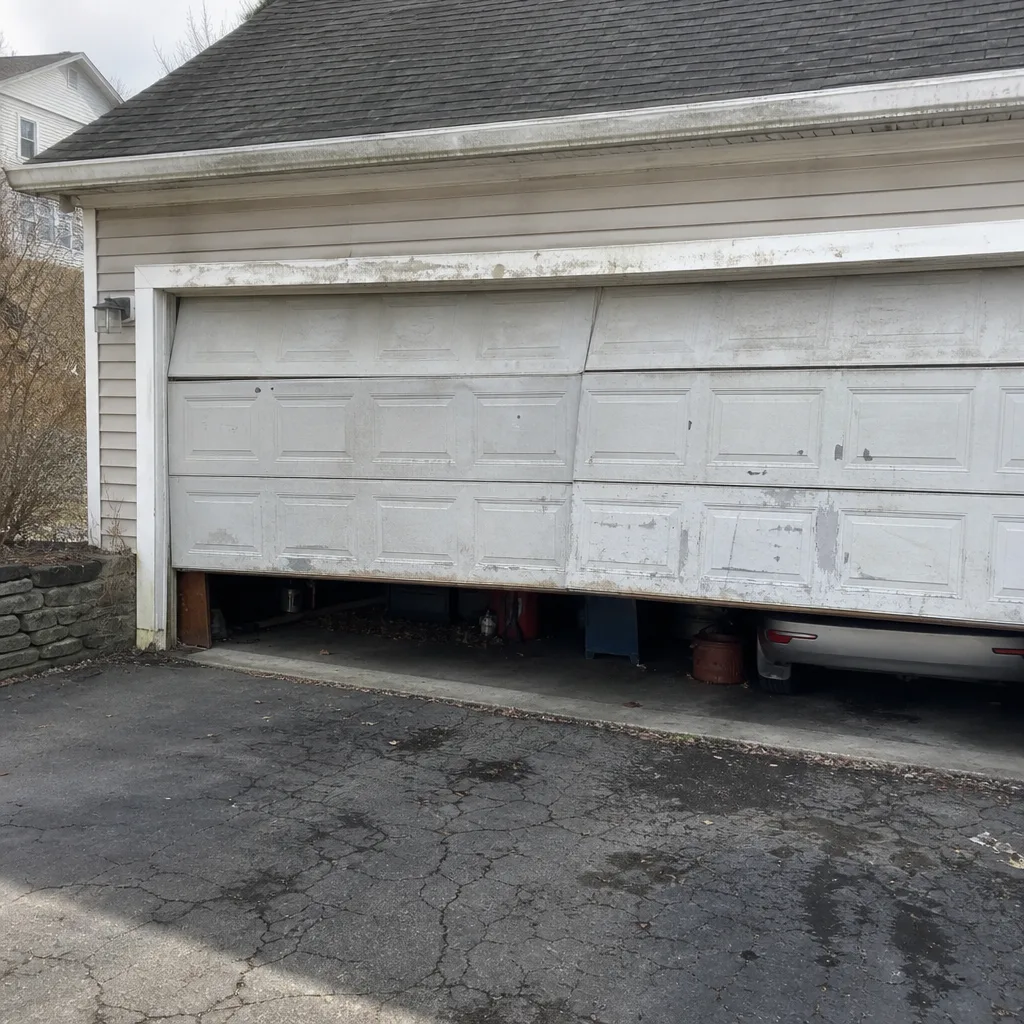 Before
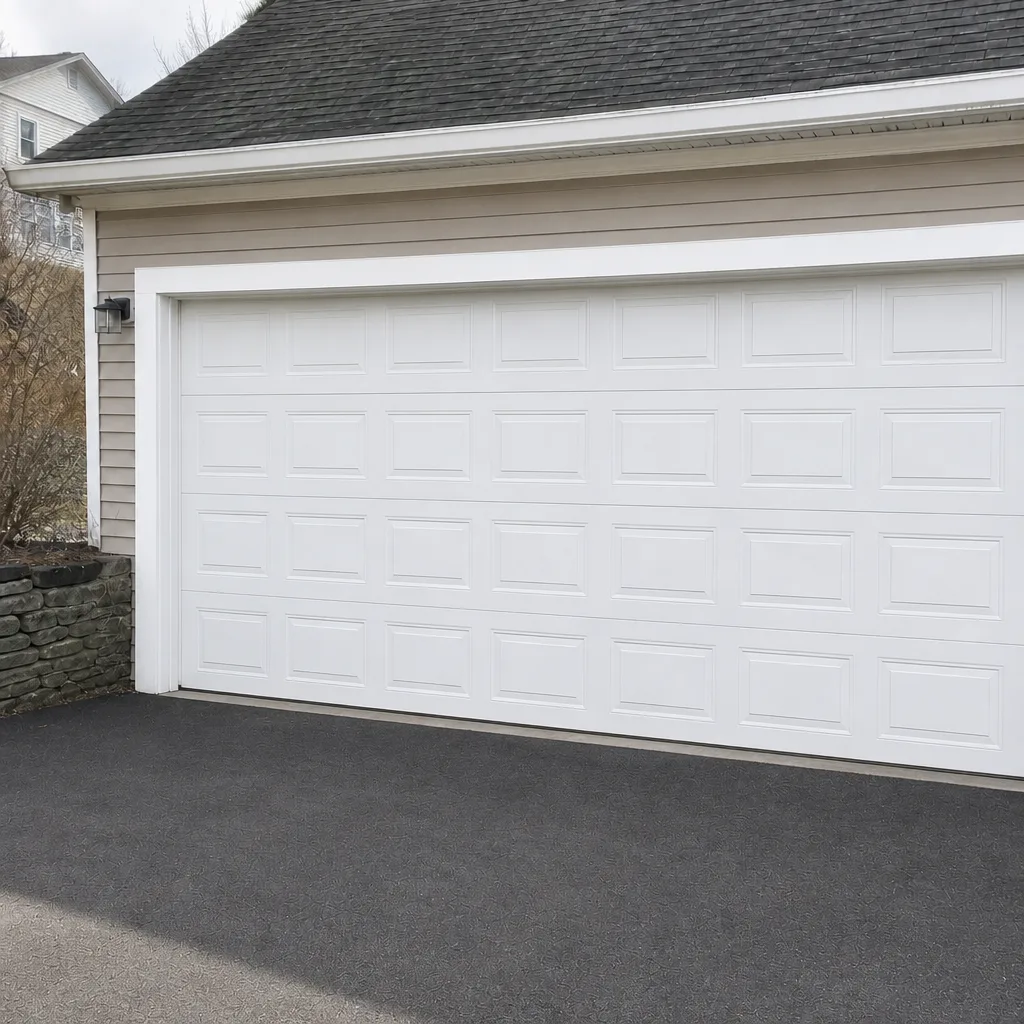 After
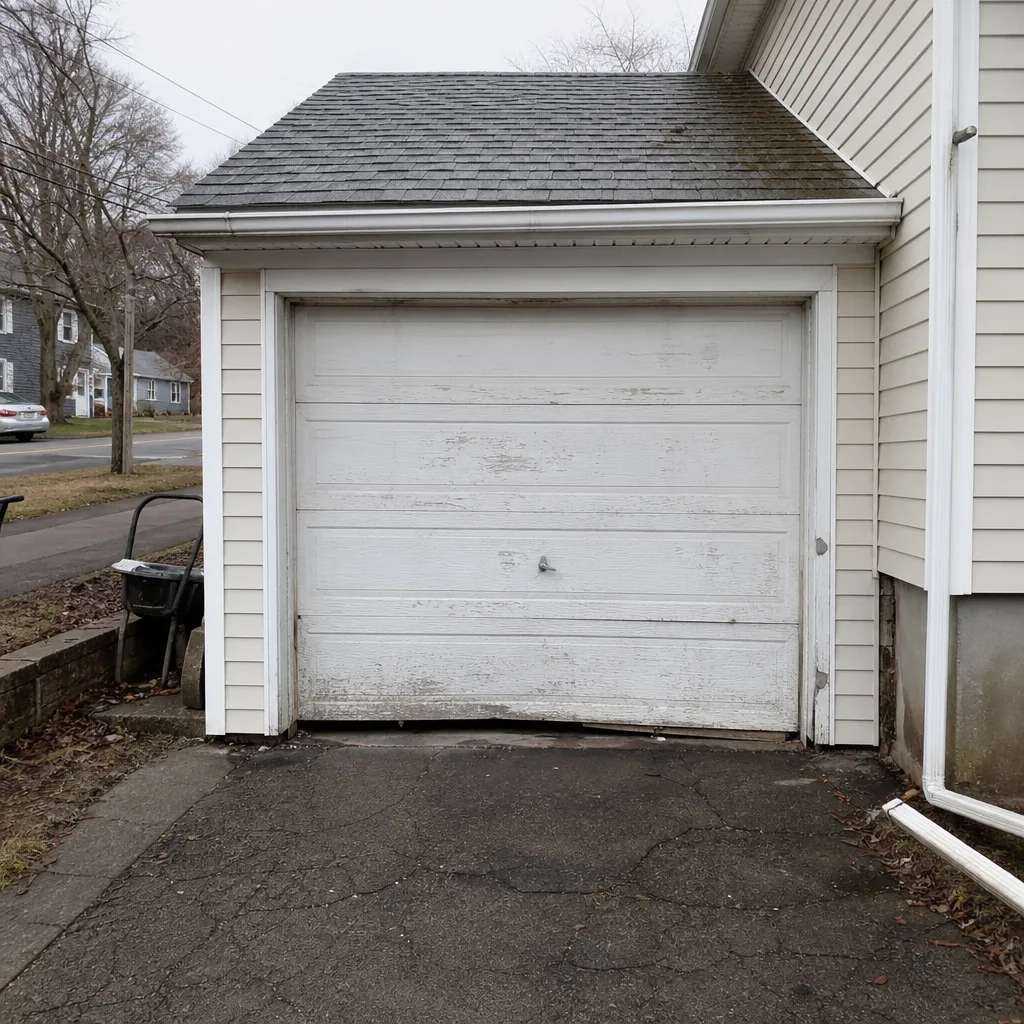 Before
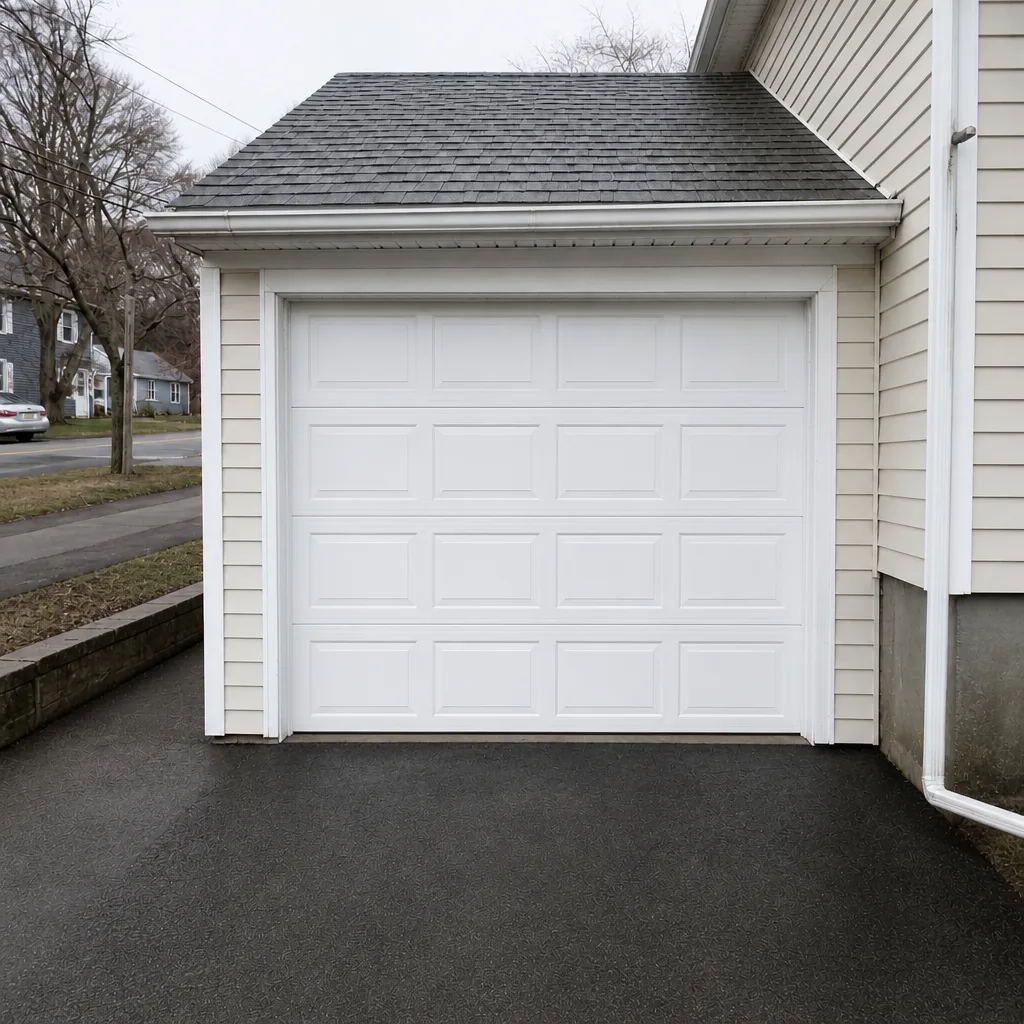 After
When to Call a Professional
Call a professional the moment you see any stop-use sign in the table above: a snapped or visibly gapped spring, a frayed or off-drum cable, a bent track, a rolled-out roller stem, or a door that has dropped on one side. Also call when the opener reverses unexpectedly, runs past its limit, or clicks but won’t drive the door – that last one usually points to a gear or drive-train failure that needs a technician with a meter. Any water damage to a bottom panel or a bottom seal that won’t seal after a freeze should get a look too.
If what you’re seeing is one of the monitor signs, there’s no urgency, but there is value in a written inspection. Ambassador Garage Door Repair offers free estimates in Waterbury – call (844) 783-9136. We answer 24/7, and fast dispatch from 7am to 7pm, Sunday through Friday, gets a technician out to read the warning signs with you and confirm whether the door is safe to keep using. The written estimate sets the price before any work begins.
Frequently Asked Questions
The most common warning sign in Waterbury is a door that closes slower and with a rougher sound than it did the previous season, usually because a winter of bottom-seal freeze has worked a hinge or a roller loose. That slowdown is the opener compensating for growing resistance, so it’s an early signal worth a free estimate before it becomes a spring or opener repair. Call (844) 783-9136 – estimates are free.
Sometimes. A visible gap in a torsion coil means the spring has already failed. An extension spring with a noticeable bow, or fresh rust at a coil junction, signals a spring that’s near the end of its life. You can’t reliably predict a torsion spring’s exact failure point by eye – it’s a trained visual, and some spring deaths give no visual warning at all. Stop using the door if you see any gap or bow, and call a technician to inspect the springs before the next cycle.
Usually it’s a door problem. An opener that slows down is typically reacting to increased resistance in the door itself – a dry hinge, a stiff spring, a binding roller, or a track out of alignment. Bumping the force setting on the opener makes the door move but keeps the damage rolling. The right move is a technician diagnosis on the door and the operator together, not a force adjustment in isolation.
It varies by component, but a torsion spring giving “popping” signals is often weeks out, not months. Rollers and tracks can give you a month or more before they cause real damage. The compounding pattern matters more than the exact timeline – the longer you wait, the more the door damages the components around it. Our technicians have up to 15 years of experience, and the recommendation is the same: at the first stop-use sign, stop using the door.
Yes, when you can. The door and opener work as a single system, and warning signs cross between them – a stiff door damages the opener’s gearbox, and a failing opener limit switch can force the door past its safe travel. Ambassador covers both sides of the system, from the Clopay, Amarr, and Wayne Dalton door side to the LiftMaster, Chamberlain, and Genie operator side, so the diagnosis stays with one point of contact instead of splitting across two contractors.
A typical inspection is a spring and cable check, a full roller and hinge visual, a track alignment check at each bracket, a bottom seal compression check, a cycle test of the opener through full travel, and a force-sensor test. It’s done on-site, without disassembly. The result is a written estimate that separates what’s safe to monitor, what needs scheduling, and what has to be handled now. Call (844) 783-9136 for a free estimate on your Waterbury home.
The Bottom Line
Every garage door failure announces itself before it happens. Noises tell you which component is under stress. Visual cues on springs, cables, rollers, and tracks separate normal wear from imminent failure. Opener behavior is diagnostic data. And once a small sign is ignored, the compounding failure pattern turns a cheap fix into a full-system repair. If you take one thing from this guide, take the decision split: stop-use signs get a technician before the next cycle, monitor signs get a scheduled inspection before the next season change. Our technicians have up to 15 years of experience reading these signs on the doors and openers Waterbury homes actually have, and we’d rather catch a $200 warning than write a $900 repair.
Call Ambassador Garage Door Repair at (844) 783-9136 for a free estimate. We answer 24/7. Fast dispatch from 7am to 7pm, Sunday through Friday, closed Saturday. Estimates are free, the written quote sets the price, and nothing starts until you’ve agreed to it.
Written by the team at Ambassador Garage Door Repair.